
Don't Sweat it!
How do you gauge how intense your workout is? How do you know you've worked as hard as you're supposed to? I know I can find it to be challenging to know if I've had a decent workout or not! One way a lot of us determine whether we've had a grueling workout is by how much we sweat.
Now, this seems like one would be relative to the other......the harder you work, the more you sweat. In a sense, yes, this is correct but a lot of other factors come into play. Factors like genetics, body mass and the environment

First, let's understand why we sweat. Sweating is the body's cooling system. The body likes to stay in a state of homeostasis. So, when the body starts to heat up, the sweat glands produce a liquid on the surface of the skin. This liquid evaporates as it comes into contact with the air and it uses energy in the form of heat. This process stabilizes the body temperature and is also known as thermoregulation.
With that said, it makes sense that the more we heat up our body the more sweat we'll produce. And, the more sweat we produce means we had a really intense workout and burned a lot of calories. This is still not neccessarily true! Now, it is true that the more energy you exert the more heat the body produces. Some people sweat more than others due to their gender or genetic factors. Conditions like excessive sweating, or hyperhidrosis, can be a sign of diabetes or thyroid issues. However, most of the time excessive sweating is not a cause for concern. I remember sweating A LOT just because of my anxiety. Once the anxiety is under control, sweating is in check!
Gender plays a role in sweat production too. Generally speaking, men tend to sweat more than women: men are larger in size and therefore have a larger water volume. It doesn't mean they had a more intense workout they just have more sweat to produce. Leading into our next point.....
The more body mass an individual has the more effort that is required to do work which leads to higher levels of sweat production. The body temperature also rises more quickly due to the increased size which accelerates the rate at which one produces sweat.
On the other hand, research has also shown that those who exercise regularly, particularly aerobic activities, tend to sweat more overall. If all factors across individuals were the same (i.e. gender, body mass, environment) the individual with more endurance training would produce larger quantities of sweat and start producing sooner than an individual who is deconditioned. The body learns to anticipate an impending workout once it senses the body warming up. When this happens, the body quickly gets to work on cooling itself off. The body becomes efficient at regulating temperature by prodcuing MORE sweat SOONER. It's just the body trying to reach that state of homestasis again.
You have to be careful how much the body does sweat. The loss of fluids and electrolytes (i.e. sodium, potassium) need to be replenished or you risk dehydration. Take in extra sodium if you anticipate heavy sweating to prevent excess fatigue and muscle cramping.
Conditions that may cause heavier sweating than normal can come from the environment. The temperature and humidity levels outside can determine how quickly sweat evaporates from the body. If exercising indoors, make sure there is enough ventilation to keep you cool.
Maintaining hydration before and during exercise is just as important as replacing electrolytes to prevent dehydration. No matter the environment or intensity of the workout, STAY HYDRATED!
About 15.5 cups (3.7 liters) of fluids/day for men
About 11.5 cups (2.7 liters) of fluids/day for women

The rate at which we sweat is more than just how hard we work. I sweat in my sleep and as soon as I walk outside on a humid, Maryland summer day. I didn't by any means get a workout in from either but my body immediately did what it had to to bring my core temperature down. Instead, try tracking things like heart rate, ability to hold a conversation and seeing/feeling the physical changes.
Keeping your heart rate above a specific threshold will prove you are putting in enough effort. This will be different for each individual and tools to calculate HR zones can be found online.
The talk test is a common way to test how hard you're working. If you can comfortably hold a conversation then you need to step it up! Aim for a pace where you are slightly uncomfortable holding a conversation.
Sometimes it takes patience to see improvement. When you can physically feel the ability to perform your exercise longer, with fewer breaks or with increased workload that is truly the best indicator of how well your workouts are going. That means you're making improvement and although it's not something you can physically see or touch, it's proof you're putting in the work no matter how little you sweat!
You don't need to sweat a lot to know you got a quality workout. Focus more on your goals and what you need to do to accomplish them!
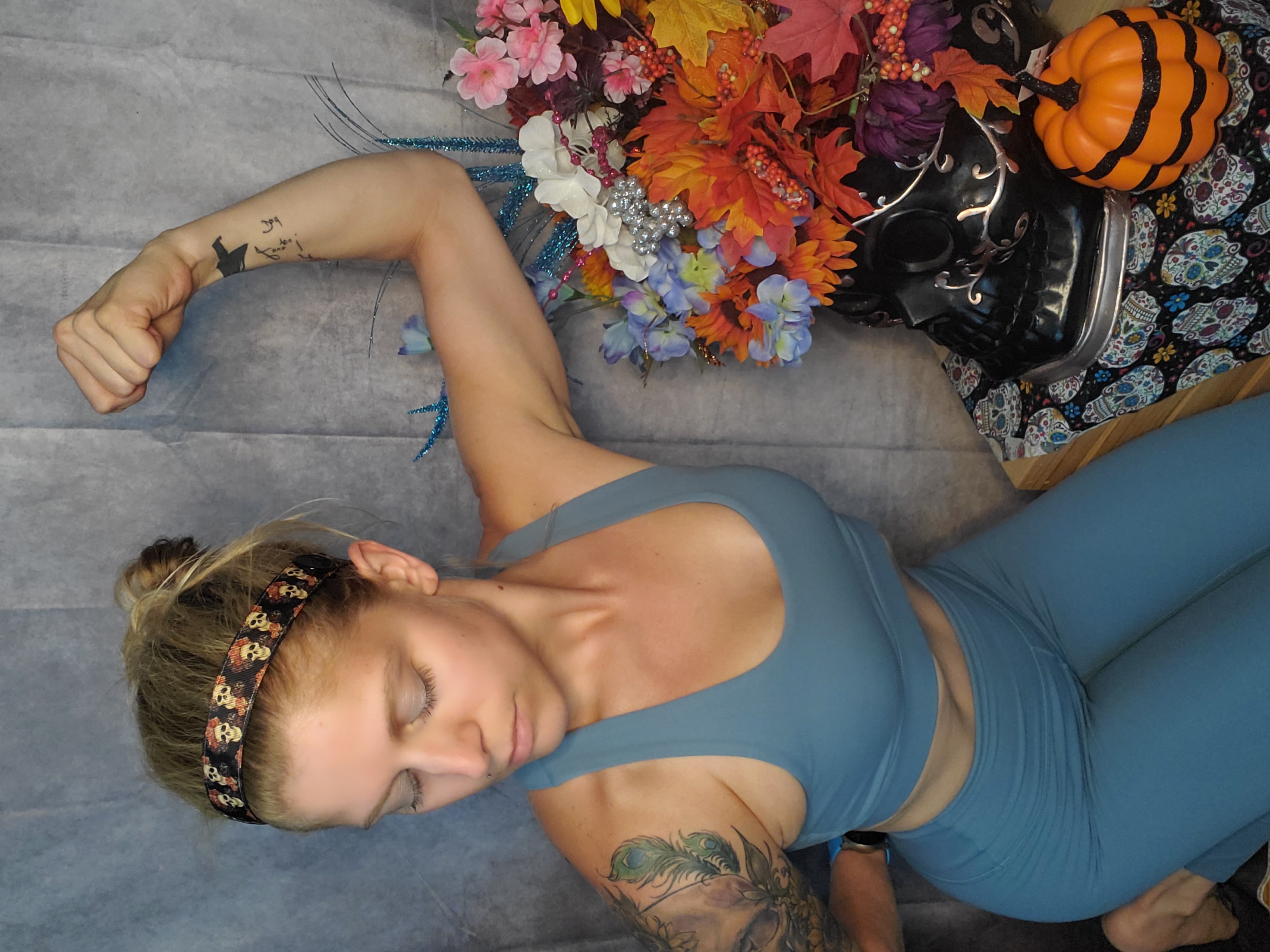
Currently I'm working on building muscle mass. My workouts look a lot different now than when I was training for a half marathon. I know I'm getting in a good workout even though I'm not sweating as much from lifting as I did with running/jogging. My goals are different so the work is going to be different. I can still see the changes from week to week. It may be in the amount of weight I'm able to lift or just feeling stronger overall. Either way, I can physically see muscular development which tells me I'm putting in enough work!


Comments